Australia's electric vehicle market is moving beyond early adopters and into the mainstream. With hundreds of thousands of EVs now travelling on Australian roads and EV sales continuing to grow, the expectations of motorists are changing along with the technology. Today's EV drivers are not only asking for cleaner and cheaper transport options, they are expecting the same level of convenience, reliability and support they have always received from traditional vehicles. That expectation is putting pressure on Australia's roadside assistance industry to evolve.
Modern vehicles need modern support services
For decades, roadside assistance was built around the needs of internal combustion vehicles. Flat tyres, fuel shortages, mechanical issues and dead starter batteries shaped the way recovery services operated.
Electric vehicles introduce a different set of challenges.
An EV driver may not experience a traditional mechanical breakdown but could still require assistance due to low battery levels, unavailable chargers, unexpected travel changes or charging infrastructure limitations.
These situations require a different response, one focused on delivering energy rather than recovering a vehicle.
EV ownership is changing what drivers expect
Early EV owners often accepted that charging required additional planning. However, as electric vehicles become common family cars, company vehicles and fleet assets, expectations are changing.
Mainstream drivers expect:
- Reliable access to charging
- Faster solutions when problems occur
- Less disruption during unexpected situations
- Services designed specifically for EV technology
The transition from petrol vehicles to EVs is not only a change in how cars are powered. It is a change in the entire support ecosystem surrounding drivers.
Mobile EV charging fills an emerging service gap
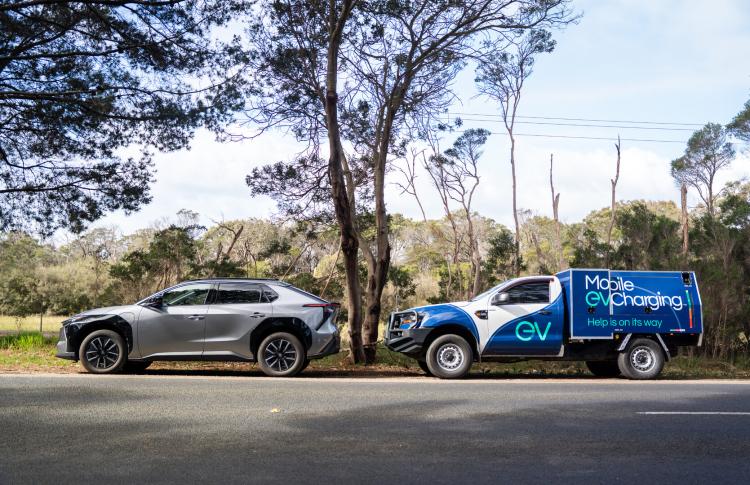
Mobile EV charging provides a practical solution for situations where fixed infrastructure cannot respond quickly enough.
Whether assisting a driver who has underestimated remaining range, supporting a fleet vehicle facing an operational delay, or providing temporary charging during infrastructure limitations, mobile charging creates greater flexibility for EV owners.
As Australia's EV population continues to expand, roadside assistance will need to become more specialised, responsive and technology focused.
The future of roadside support will not be defined by simply recovering vehicles after problems occur. It will be about keeping electric vehicles moving through smarter, faster and more flexible charging solutions.